19962013
Building an iPod Killer
Mitch Ratcliffe: "Musicians, for all they know about how to twang our heartstrings are not the folks I want building my consumer electronics. I also don't want political advice from Leonardo Dicaprio or Mel Gibson."
In response to Robert Scoble’s open letter to Bill Gates asking Microsoft to get committed to building an interesting music player, Mitch points out that giving users carte blanche to design products that they want isn't always the best idea. The result will almost always try to do to many things, over-solve problems and be waaayyy to expensive to manufacture and sell. The real magic lies with taking an understanding of the problems faced by users and then building a solution that solves this problem in accordance with the customers requirements. Solve problem first, match requirements second.
Figuring the size of this problem space is critical. Overjudge and you've got too many widgets; shoot too low and it doesn't do what customers want. Nothing good ever comes from products that try to solve "the entire problem".
Here's what I suspect the designers of the iPod picked as their problem space;
Once they'd figured out what they thought the problem was, Apple went out and built a product that met their customers requirements - and now they own the solution to that problem space.
Anyone that wants to come into and attack the iPod now has to give the market a better answer to those problems or find a new problem to solve. If I were Microsoft, I wouldn't be much interested in helping my OEMs deal with the former problem except at a superficial level. The fact that Apple is making a killing at the iPod doesn't change the fact that these same customers still have problems that need to be solved.
For instance -
So what am I describing here? An MP3 transporter that lets me listen to my music through my home stereo, car stereo and office PC speakers. Arguably, some of the current crop of devices purports to solve this problem, but in their reach to solve other problems, this one is "undersolved". The solutions aren't "just good enough" in any way. Existing solutions to this problem are vying for the mindshare that FM radio currently owns - not Apple. Unfortunately, they are universally too complicated, underperforming and typically, too expensive to usurp the current broadcast king.
Solve this problem and get a chance at owning a big portion of the market that twiddles the FM dial. Make it easy for people to leave Clear Channel and I bet you they will. Even better, build something that decisively addresses this need and you've got a serious contender to the iPod on your hands.
Apple has never been great at capitalizing on the second wave of innovation. Effectively dealing with sustaining innovations has typically been Apple's biggest weakness and anyone that gets into position for the day that the iPod cow stops giving milk will be well positioned to assume leadership in this very early stage market.
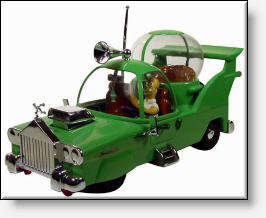
As a side note, Mitch also points out a classic example of what happens when customers get to build what they think they want;
In response to Robert Scoble’s open letter to Bill Gates asking Microsoft to get committed to building an interesting music player, Mitch points out that giving users carte blanche to design products that they want isn't always the best idea. The result will almost always try to do to many things, over-solve problems and be waaayyy to expensive to manufacture and sell. The real magic lies with taking an understanding of the problems faced by users and then building a solution that solves this problem in accordance with the customers requirements. Solve problem first, match requirements second.
Figuring the size of this problem space is critical. Overjudge and you've got too many widgets; shoot too low and it doesn't do what customers want. Nothing good ever comes from products that try to solve "the entire problem".
Here's what I suspect the designers of the iPod picked as their problem space;
Customers love portable music, but digital music (MP3s) are not easily portable. They can either listen to them on their personal computers or on under-powered, overly complex MP3 players. A device that;
1) makes it easy to transfer music from the PC to the device;
2) has tons of storage (multi-gigabyte);
3) has great battery-life (five+ hours);
4) is small enough to jog with;
...makes digital music much, much more portable than it is today.
1) makes it easy to transfer music from the PC to the device;
2) has tons of storage (multi-gigabyte);
3) has great battery-life (five+ hours);
4) is small enough to jog with;
...makes digital music much, much more portable than it is today.
Once they'd figured out what they thought the problem was, Apple went out and built a product that met their customers requirements - and now they own the solution to that problem space.
Anyone that wants to come into and attack the iPod now has to give the market a better answer to those problems or find a new problem to solve. If I were Microsoft, I wouldn't be much interested in helping my OEMs deal with the former problem except at a superficial level. The fact that Apple is making a killing at the iPod doesn't change the fact that these same customers still have problems that need to be solved.
For instance -
Suburban users cannot effectively listen to their music in a simple and seamless manner as they move throughout their day. This class of customers prefers the simplicity of FM radio, but yearns for the depth and personal involvement that comes from listening to their own music. A device that;
1) Makes it easy to listen to an entire CD collection at home, in the car and at the office;
2) untethers people from specific listening devices;
3) has great battery life (10+ hours);
4) has tons of storage (40+gb);
5) is small enough to fit into a purse, glove compartment, briefcase or suitjacket pocket.
...would make it much easier for suburban dwellers to listen to the music they enjoy throughout their entire day.
So what am I describing here? An MP3 transporter that lets me listen to my music through my home stereo, car stereo and office PC speakers. Arguably, some of the current crop of devices purports to solve this problem, but in their reach to solve other problems, this one is "undersolved". The solutions aren't "just good enough" in any way. Existing solutions to this problem are vying for the mindshare that FM radio currently owns - not Apple. Unfortunately, they are universally too complicated, underperforming and typically, too expensive to usurp the current broadcast king.
Solve this problem and get a chance at owning a big portion of the market that twiddles the FM dial. Make it easy for people to leave Clear Channel and I bet you they will. Even better, build something that decisively addresses this need and you've got a serious contender to the iPod on your hands.
Apple has never been great at capitalizing on the second wave of innovation. Effectively dealing with sustaining innovations has typically been Apple's biggest weakness and anyone that gets into position for the day that the iPod cow stops giving milk will be well positioned to assume leadership in this very early stage market.
As a side note, Mitch also points out a classic example of what happens when customers get to build what they think they want;
See this post as it first appeared on Blogware.
4 comments
Comments are closed - these are kept exactly as they were left.
Rex Hammock, December 21, 2004
I guess I'm missing something, but what you've described is basically what I already do with my iPod/iTunes combined with the eloquently designed Apple Airport Express (works w/ both Mac and Windows) to seamlessly pump iTunes through my home stereo system, a <$100 3-piece speaker system from Altec Lansing for the office and a Griffin iTrip for the car (works fine in my car, but I've had a glitch with a rental car). I also use my iPod and a Griffin iTalk to make voice memos when wanting to record a thought while walking or driving. And despite what is being suggested about Apple's second-generation innovation, it is not so much the iPod/iTunes that makes the iPod experience unique, but the continuous innovation Apple is doing (and allowing its users to create) that perhaps are too subtle (the recently added ability to search iMix lists, for example) for observers, rather than addicted users like me, to appreciate.
Ross, December 21, 2004
Rex,
Thanks for the thoughtful comment.
"what you've described is basically what I already do with my iPod/iTunes"
Sort of. You described a setup that includes $300 in additional accessories (at least!) and some pretty good technical savvy. I'm talking about making it even easier - modifying the form factor to the point where its a no-brainer. The iPod is really an urban device (from the standpoint that it caters to people that have a lot of mobility time on their hands). I'm describing a device more appropriate for the worker/commuter - the stereotypical suburbanite that spends waaay too much time driving and has just enough kids on their hands that dealing with iTrips and Airports is one layer of complexity too many.
"...the continuous innovation Apple is doing ..."
My point is that there isn't much innovation here. Its all line-extension - subtle refinements designed to make it easier for existing markets to consume. This holds true across the board for most of Steve's undertakings - Pixar, Apple, the iMac, the iPod, etc. All very revolutionary out of the gate, but very ho-hum when viewed over time. Pixar simply continues to render more believable animation, the iMac continues to get more stylish and the iPod continues to get tweaked here and there. Nothing terribly innovative in all of that.
There's nothing *wrong* with any of this, I'm just pointing out that there are other market problems for competing firms to deal with. Ultimately, the solution to one of these problems will unseat the iPod - a day I'm looking forward to because I can't bear the crazy high-prices on this gear! :)
Rex Hammock, December 21, 2004
I guess you're correct on the budget, however, I have the Apple Airport Express as a wireless station at home, so it's doing double duty...and the office speakers were already there. Also, I think you'll see some dramatic price falling after the holiday sales season: I'd guess about January 9 is when the big fall begins. As to the "no brainer" aspect, the iTrip and iTalk just snap onto the top of an iPod and the iTunes/Airport Express have, at least for me, worked like magic: I did no configuration...in fact, I have no idea how it all connected up. And the speaker in my office just plugs into my iPod or computer. I don't know how it could get any easier.
Also, if you think the film "The Incredibles" is successful merely because of the quality of the animation rendering, I don't think you saw the same movie I did.
But I'll stop there as I do appreciate your point of view.
Ross, December 22, 2004
I hear what you're saying Rex - and I don't entirely disagree with everything you've said. I just know that there has to be a better way to make my digital music listenable in the two or three places that I spend most of my time and carrying around extra cables and doodads ain't a great final solution.
Thanks again for your comments and have yourself a great holiday!